 1 / 6
About
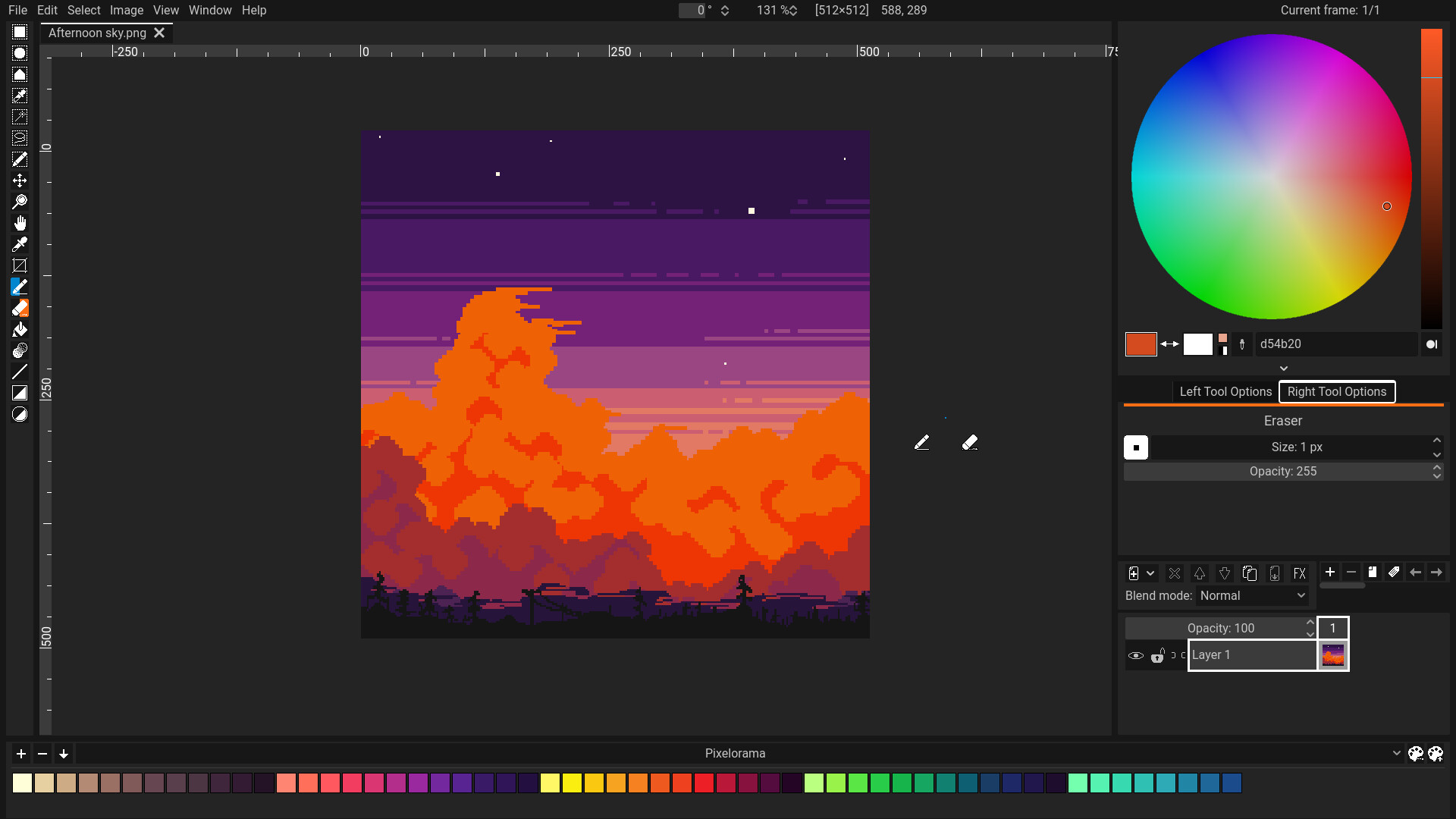
Pixelorama is a pixel art multitool for drawing sprites, tiles and animations. It is aimed at pixel artists and game developers, from beginners making their first sprite to indie studios producing full tilesets and animated characters. It runs on Windows, macOS, Linux and even in the browser, so you can sketch a sprite on almost any machine. Pixelorama is developed by Orama Interactive and built with the Godot game engine, which shows in its game-dev-friendly features. It began in 2019 and has grown into one of the most capable free pixel art tools, with more than 10,000 GitHub stars and an active community. What people love is how much it packs in: pixel-perfect drawing, an animation timeline, non-destructive layer effects and even 3D layers, all in a tool that costs nothing. It can also import animations from Aseprite, Photoshop and Krita files. Highlights: • Frame-by-frame animation with onion skinning, frame tags and drawing while playing • Pixel-perfect lines, shading tools, palettes and an indexed color mode • Pixel-art scaling and rotation algorithms such as cleanEdge, OmniScale and rotxel • Layers with clipping masks, group blending and non-destructive effects like outlines and drop shadows • 3D layers for combining simple 3D shapes with your pixel art • Tilemap layers for rectangular, isometric and hexagonal tiles • Export to spritesheets, GIFs and video, plus a command line for batch exports • Audio sync for animations and import from Aseprite, Photoshop and Krita Pixelorama is free and open source under the MIT licence, with downloads for Windows, macOS and Linux and a web version. It is also sold on Steam for US$9.99 for Windows and Linux, a convenient way to get automatic updates and support the developers.
Reviews
Sign in to review. Reviews carry how long you have used the product.
No reviews yet. The first one from someone actually using it is worth a lot.
Similar
PixeloramaOpen